
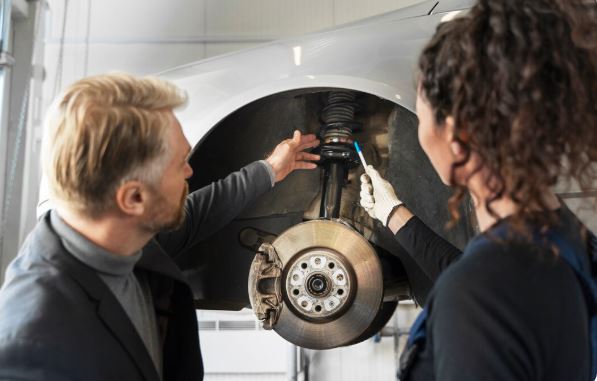
Rotors don’t last forever, and their lifespan depends on driving style, road conditions, and part quality. Most drivers won’t find a single exact number because rotor wear happens gradually. Typically, brake rotors last 30,000 to 70,000 miles, with about 50,000 miles being a common average under normal driving. Premium rotors and highway driving may extend service life, while heavy city traffic and frequent hard braking can shorten it. Drivers searching for brake repair Houston should schedule routine brake inspections to help maximize rotor lifespan.
Brake Rotor Lifespan
If you are comparing auto repair near me options, rotor lifespan is one of the first things a professional shop checks. Technicians measure rotor thickness, heat damage, and pad contact quality instead of guessing remaining life. Rotor durability follows driving patterns:
- City driving (stop-and-go): Constant braking and heat buildup accelerate wear. Lifespan usually ranges from 30,000 to 50,000 miles, depending on traffic severity and braking habits.
- Mixed driving: Combines highway cruising with city traffic, producing moderate heat stress. Many rotors last around 40,000 to 70,000 miles under balanced driving conditions.
- Mostly highway driving: Allows cooling between braking events and reduces aggressive friction buildup. Rotors may last 60,000 to 100,000 miles, sometimes longer with quality parts.
Brake Rotor Lifespan by Vehicle Type
Rotor lifespan varies by vehicle size, weight, and braking technology. Heavier vehicles create more braking stress, while regenerative systems can reduce mechanical braking use. At Eric’s Car Care, drivers can get professional brake inspections to monitor rotor wear and safety.
- Compact cars: Lower vehicle weight often supports longer rotor life.
- SUVs and trucks: Heavier mass increases braking force and may speed up wear.
- Performance cars: High-speed driving and heat cycles can shorten rotor durability.
- Hybrids and electric vehicles: Regenerative braking reduces rotor wear, though surface rust may appear more often.
Signs You Need New Brake Rotors
If braking feels shaky or less responsive, rotor problems may be developing slowly. At Eric’s Car Care, early detection helps prevent expensive brake system damage. Common warning signs include:
- Steering wheel vibration when braking: Often caused by warped rotors or uneven surface wear due to braking pressure.
- Pulsating brake pedal: Indicates rotor thickness variation or surface irregularities affecting friction.
- Squealing or grinding noises: May mean brake pads are wearing into rotor material and creating damage.
- Longer stopping distance: Reduced friction between pad and rotor can weaken braking performance.
- Visible grooves or heat spots: Blue heat marks, scoring, or deep grooves suggest overheating or surface deterioration.
Causes of Worn Brake Rotors
Rotors wear prematurely when heat, friction, or mechanical problems are excessive. Fixing root causes helps prevent repeat damage after replacement. Main factors include:
- Hard braking and high-speed stops: Generates extreme heat that increases warping risk over time.
- Stop-and-go traffic: Repeated friction cycles accelerate surface wear and thermal stress.
- Towing heavy loads: Forces brakes to work harder and produce more heat.
- Low-quality brake pads: May leave uneven material deposits on rotor surfaces.
- Sticking calipers or slide pins: Keeps pads partially engaged and causes overheating.
- Driving through water after heavy braking: Rapid cooling can distort hot rotors.
Replacement vs Resurfacing
Drivers often ask whether rotors can be resurfaced instead of replaced. Resurfacing may work in limited situations but depends on rotor thickness and damage level. Resurfacing may be possible if:
- The rotor is above the manufacturer’s minimum thickness after machining.
- Damage is limited to light grooves or minor pad deposits.
- There are no cracks, heavy corrosion, or severe heat spots.
Replacement is usually better if:
- Rotor thickness is near the safety limit.
- Warping, deep scoring, or rust damage is present.
- Long-term performance and safety are priorities.
Tips to Maintain Brake Rotors
Extending brake rotor life depends largely on driving behavior and consistent maintenance. Simple habit changes can reduce heat buildup and prevent premature wear. Following proper brake care also helps avoid costly repairs and keeps braking performance smooth and reliable.
- Brake earlier and smoother: Avoid late hard stops that generate excessive braking heat.
- Use quality brake pads: Match pad material to your driving style, such as ceramic or semi-metallic.
- Replace pads before they wear out: Prevent metal-to-metal contact that can score rotors.
- Maintain calipers and slide pins: Ensure pads retract properly after braking.
- Bed in new pads and rotors: Helps reduce uneven material transfer.
Flush brake fluid regularly: Maintains stable hydraulic pressure during high-heat braking.