
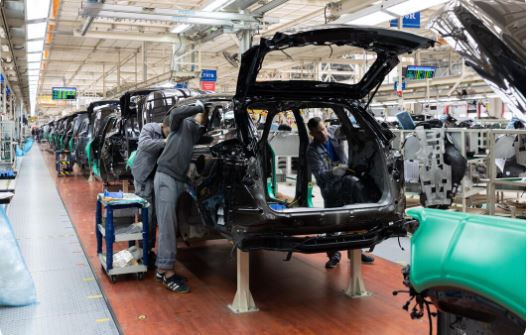
The American auto industry has always been a bellwether for larger shifts in technology and labor. Factories once ran on sweat and steel, then on robotics and lean production. Now, a new wave is reshaping the factory floor, one that blends precision digital control with hands-on craftsmanship in ways that feel both futuristic and grounded in long-standing manufacturing traditions. At its core, this shift is about how car parts are made and how quickly they can go from a CAD design to a road-ready component.
From Drafting Table to Digital Control
The change begins where ideas first take physical shape. Engineers today rely on software that can simulate the stress and heat a part will face long before it’s built. Once those simulations prove reliable, the designs move to the machines. CNC machining has become the workhorse for this process, allowing aluminum blocks, steel rods, and composite slabs to be turned into complex parts with sub-millimeter accuracy. What once required hours of hand-fitting and tool adjustments can now be produced in minutes, with repeatability that ensures every car rolling off the line meets exacting safety standards. That speed doesn’t erase the role of skilled machinists, though. They’re the ones programming the equipment, interpreting tolerances, and catching the small but costly errors software can miss.
This step has changed the very rhythm of a factory. Instead of waiting weeks for a test batch, designers can sign off on components in a matter of hours. Small shops that once struggled to compete with overseas suppliers are finding new footing by offering custom work at scale. For automakers, that’s a strategic edge: prototypes become production-ready faster, and adjustments to meet evolving safety or efficiency standards can be implemented without derailing an entire model year.
Metal, Mold, and Muscle
Once the design is proven, the next challenge is shaping the raw material itself. Traditional stamping presses still dominate assembly plants, but the finer details are increasingly handled with techniques that offer both flexibility and durability. Auto sheet metal fabrication has taken on a new identity, moving away from brute force toward precision-guided processes. Laser cutting, roll forming, and hydroforming now allow complex curves and structural reinforcements to be integrated directly into panels. These processes reduce the number of welds and fasteners needed, trimming weight while boosting strength.
The artistry here is in balance. Designers want sleek lines that reduce drag, while safety engineers demand crumple zones that absorb impact. Fabricators translate those competing priorities into panels that satisfy both camps. It’s no small feat, and it shows how far the craft has evolved since the days when a hammer and a torch were the primary tools. Now, technicians stand beside equipment that looks more like something from aerospace than Detroit in the 1950s, yet the human eye and hand remain essential in ensuring each curve matches its blueprint.
Robots on the Line, Humans in the Loop
Automation is no longer about replacing workers, but about reassigning them. Robots weld, paint, and move heavy components, yet they rely on people to guide their routines and step in when a task requires improvisation. Instead of standing in one spot tightening bolts for eight hours, a modern line worker might oversee a series of robotic stations, ready to make adjustments when materials vary or when production goals shift. The result is not fewer jobs, but different jobs. Skills that once centered on muscle and repetition now lean toward problem-solving, coding, and mechanical insight.
This hybrid approach keeps quality consistent while opening doors for workers to build new careers in programming and maintenance. Training programs at community colleges and trade schools are shifting accordingly, creating pathways for people who once thought factory work was a dead end. As the industry grows, so does the workforce’s technical expertise, which in turn pushes manufacturers to invest further in advanced systems.
Sustainability on the Factory Floor
Environmental pressures aren’t just shaping the cars being built, but the processes behind them. Automakers are under pressure to cut emissions not only from tailpipes but from the factories themselves. That’s driving investment in renewable energy sources for plants, waste-reduction programs, and recyclable materials in production. Aluminum, once a costly material, is increasingly used because it can be recycled endlessly without losing strength. Paint shops, once notorious for chemical runoff, are now adopting waterborne coatings and closed-loop systems that drastically cut pollution.
The irony is that sustainability often goes hand in hand with efficiency. Using less material and recycling scrap saves money as well as emissions. Reducing energy waste lowers costs and boosts public perception. For a global industry under scrutiny, these steps aren’t just compliance—they’re a competitive advantage.
Electrification and Its Ripple Effects
The rise of electric vehicles is perhaps the strongest driver of change. Building an EV doesn’t just mean swapping engines for motors. It requires rethinking battery housings, cooling systems, and high-voltage safety. Factories once optimized for stamping out gas-powered cars are being retooled to handle the demands of massive lithium-ion packs and the intricate electronics that control them. This retooling is no small investment, but it positions automakers for a future where EV demand is only expected to grow.
The supply chain is also adapting. Mining, refining, and transporting battery materials is becoming a parallel industry, with factories aligning their output with new sourcing standards. For workers, that means learning skills in battery management, electrical safety, and thermal control, all of which differ from the mechanics of combustion.
The Future Is Flexible
Perhaps the most striking trend is flexibility itself. Where factories once dedicated entire lines to a single model, modern facilities can switch between vehicles with only minor reconfiguration. That adaptability is essential in a market where consumer tastes shift quickly and regulations evolve constantly. A plant that can pivot from SUVs to compact EVs without losing weeks of production is a plant that stays competitive.
Flexibility also extends to how automakers collaborate with suppliers. Small, specialized shops are increasingly folded into larger supply chains, producing parts tailored to niche demands. Digital communication between designers, machinists, and fabricators keeps everyone on the same page, ensuring even the most complex assemblies fit together with minimal error.
American auto manufacturing isn’t vanishing, it’s reinventing itself. The machines are faster, the processes cleaner, and the workforce more skilled than ever. The essence of the industry—turning raw material into something that moves people—is still there, only now it’s backed by layers of technology that make the work more precise, sustainable, and adaptable. What emerges is not the factory of the past but one that’s firmly positioned to carry the industry into the decades ahead.